Nicholasville, KY · Garage Door Service
Is Your Garage Door Worth Fixing? Nicholasville's Housing Stock Says a Lot
Nicholasville homes built mostly between 1956 and 1991 often have original hardware that's worth repairing, not replacing. Here's how to tell which is which.
- Repairs & new doors
- Springs & openers
- Serving 7 nearby communities
The Problem
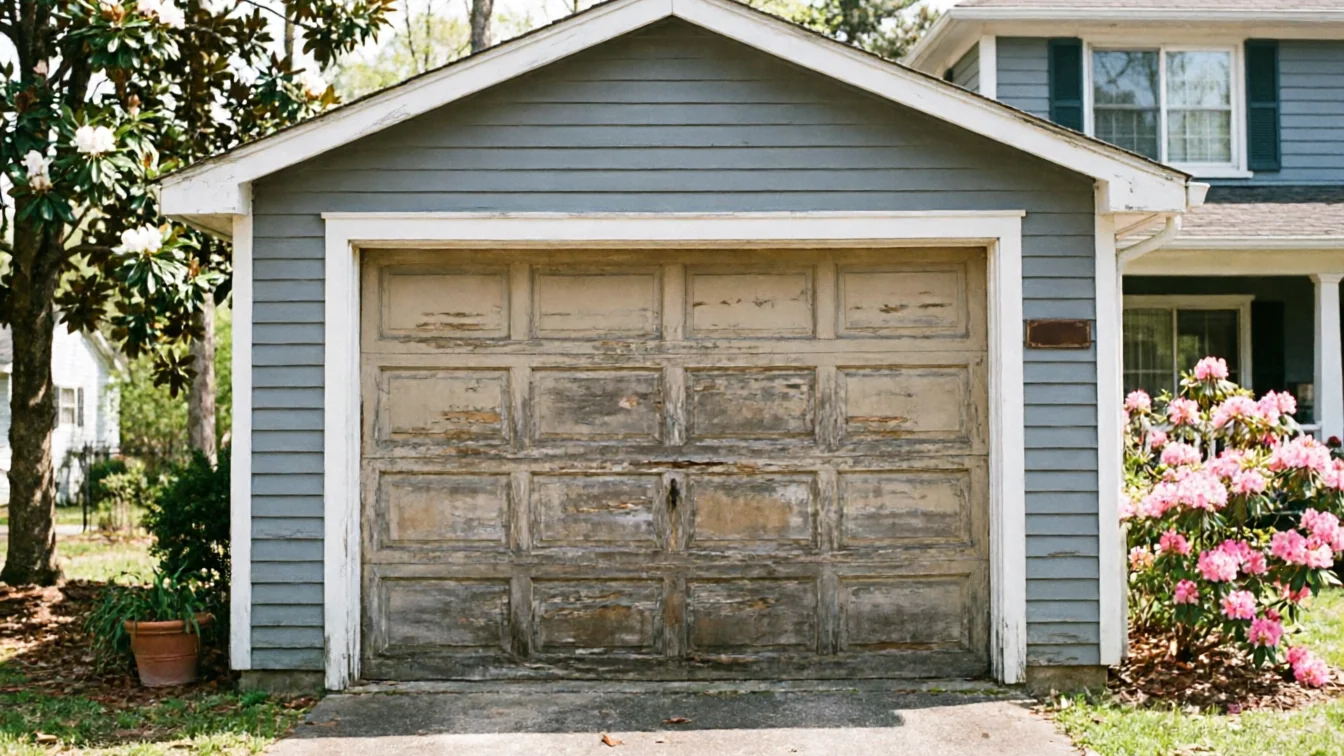
Most of the calls we get aren't about a door that stopped working out of nowhere. They're about a door that's been getting worse for a year and finally quit. That tracks with what's actually out there: housing across this service area went up mostly between 1956 and 1991, with a median build year of 1971, and the bulk of it clusters in 1960s and 70s construction across the seven areas we cover - in close to Nicholasville itself and out toward places like Deerfield, Beaumont Residential, and the Hamburg side. A door installed with a house built in 1971 isn't the door on it now, usually, but the opening, the track spacing, and often the spring hardware are original or close to it. That's the actual problem: not one bad part, but a whole system sized for a house that's 50-plus years old, patched piece by piece as things failed. Nobody tells a homeowner that a 1998 opener bolted onto a 1971 track setup is a mismatch waiting to show up as noise, drift, or a door that reverses for no reason. It's not dramatic. It's just old parts wearing against each other at slightly different rates until one of them gives.
What Most People Get Wrong
The common mistake runs two directions. Some people assume anything built before they were born is junk and jump straight to replacement when a $200 spring job would've solved it. Others assume a working door doesn't need attention and ignore the grinding noise until a cable snaps on a Saturday. Neither read fits what's actually here. With 5,883 owner-occupied houses in this service area and most of that stock dating to the 1960s and 70s, a lot of doors are original or one generation removed from original - old enough to have real wear, not old enough to be structurally shot. The median household income here, just under $59,600, usually means a repair pencils out before a full replacement does, provided the door itself - the panels, not just the opener - is sound. The other thing people get wrong: they replace the opener and expect it to fix a door that's binding on its own track. An opener can't correct a door that's racking or a spring that's under-tensioned for its weight. If the door still travels smoothly by hand with the opener disconnected, the opener is probably your problem. If it doesn't, it's not.
What to Look At First
Start with the springs, not the opener. On a house from the 1960s or 70s stock that makes up most of this area, torsion springs were sized for the door and hardware installed at the time - and after 50 years of cycling, they're either original and tired or already replaced once and due again. Lift the door by hand with the opener released. If it's heavy, uneven, or drops on its own past halfway, that's spring wear, not an opener fault. Next, check the track alignment and the rollers - steel rollers on older installs wear grooves that make the door bind at the same spot every time. Third, look at the panels themselves for rust at the bottom seam, especially where a concrete driveway holds moisture against the steel. One honest limitation: if the bottom panel is rusted through or the door is visibly out of square, no amount of spring or roller work fixes that - at that point you're paying to delay a replacement, not solve the problem. We'll tell you straight when that's where you are instead of running up a repair bill on a door that's past it.
What the Weather Here Does to It
This area sits in a cold-moderate climate band, which means the door goes through repeated freeze-thaw cycling every winter rather than one hard freeze and done. That matters more on older steel doors from the 1960s and 70s stock than on newer insulated models, because older panels expand and contract more with temperature swings, and that movement works at the seams and the bottom seal year after year. Condensation forms on the inside of an uninsulated steel door overnight, then freezes to the floor by morning - which is why a door that opened fine last evening can be stuck solid at 6 a.m. The same cycling stresses torsion springs, since cold steel loses a little flex and takes more force to lift the same weight. None of this shows up as one event. It shows up as a door that gets a little stiffer every winter, a little noisier every spring, until the parts that were marginal in October fail outright in January. If your door's getting harder to lift only in cold weather, that's the springs telling you they're near the end, not a one-time fluke.
Frequently asked questions
My house was built in the 60s - is the garage door original too?
Not usually the door panels themselves, but the track, header bracket, and sometimes the torsion spring setup often are. If nobody's mentioned replacing the springs, there's a decent chance they're original to a house from that era, which puts them well past their expected cycle life.
Is it worth fixing an old door instead of replacing it?
Often yes, if the panels are structurally sound and the problem is springs, rollers, or track alignment. If there's rust-through on the bottom panel or the door is racked out of square, repair just delays a replacement you'll still need.
Why does my door get stiff only in winter?
Cold steel flexes less and condensation can freeze at the bottom seal overnight, both of which make an aging spring or worn roller work harder right when it's already near the end of its life. It's usually a sign the hardware is marginal, not a weather fluke.
Related garage door services in Nicholasville
More garage door guides
Book garage door service in Nicholasville
Call now or request a quote - tell us what the door is doing and where you are.